



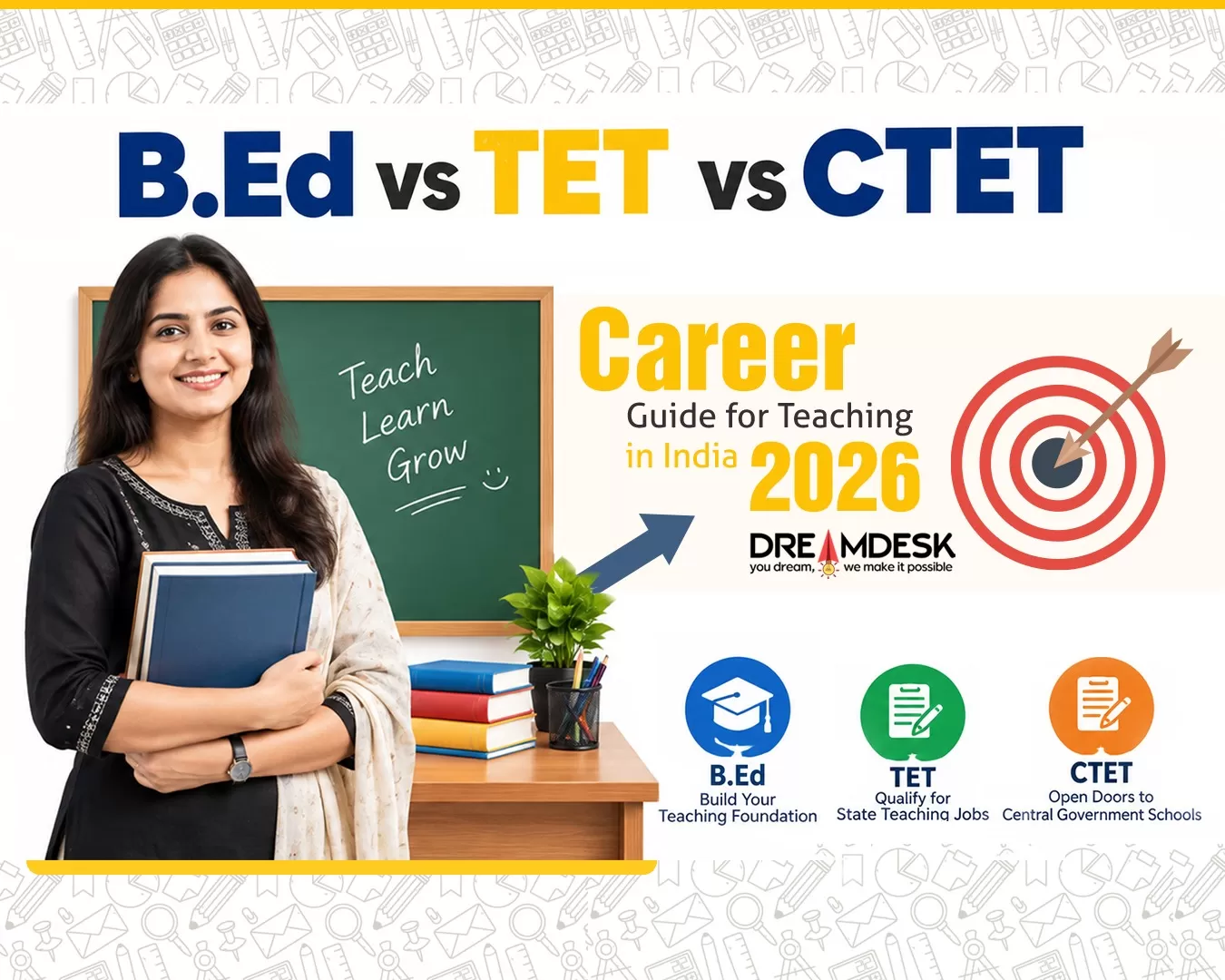
B.Ed vs TET vs CTET: Career Guide for Teaching in India 2026
Ever wondered why your favourite teacher makes such a big difference in your life? Now imagine being that person for someone else - and getting a stable government job for it. Teaching in India is going through a quiet boom, and most students don't even know it.
Why Teaching Is a Smart Career Choice Right Now
India's teaching workforce has crossed 1.01 crore people, yet the country still has close to 10 lakh vacant teacher posts. That's not a small gap. It means a real opportunity for anyone willing to prepare properly. In fact, CTET registrations jumped from 20.25 lakh in mid-2024 to over 25.3 lakh in 2026, showing just how many students are waking up to this career path.
But here's the catch - only about 1 in 4 candidates actually clear the CTET exam. So the demand is high, but so is the need for smart preparation.
B.Ed, TET, and CTET: What's the Difference?
Many students confuse these three terms. Here's the simple breakdown:
- B.Ed (Bachelor of Education): This is a degree, not an exam. You need it to become eligible to teach in most schools. It usually takes two years after graduation.
- TET (Teacher Eligibility Test): This is a state-level exam. Each state runs its own version, like WB TET, UP TET, or MAHA TET. Clearing it makes you eligible for teaching jobs within that state.
- CTET (Central Teacher Eligibility Test): This is the national-level exam, run twice a year. Clearing CTET opens doors to central government schools like KVS (Kendriya Vidyalaya) and NVS (Navodaya Vidyalaya), plus many private schools across states.
In short: B.Ed builds your qualification. TET and CTET prove your eligibility. You usually need B.Ed first, then TET or CTET, to apply for teaching posts.
What Does the Job Actually Pay?
This is where it gets interesting. A KVS PGT (Post Graduate Teacher) can earn an in-hand salary between ₹65,000 and ₹80,000 per month, along with all the benefits of a central government job - transfers, pension, and job security. Even entry-level roles in private CBSE schools for a PRT or TGT teacher start around ₹25,000 to ₹35,000 per month, with steady growth as you gain experience.
Which Path Should You Choose?
- If you want to teach in your home state's government schools, focus on your State TET.
- If you want central government jobs (KVS, NVS, DSSSB) or want the flexibility to apply anywhere in India, go for CTET.
- Either way, B.Ed is your foundation - most TET and CTET applications require it.
A Word of Caution
The low pass percentage in CTET 2026 tells us something important - many candidates are underprepared, not underqualified. This isn't a difficulty problem; it's a preparation problem. Structured guidance, proper study plans, and regular mock tests make a real difference in clearing these exams on the first attempt.
This is exactly the kind of decision students often get wrong without the right guidance - choosing between B.Ed colleges, understanding which exam suits their goals, or even picking the right specialization. Career counselling platforms like Dreamdesk help students map out this journey clearly, from choosing the right B.Ed course to planning a TET or CTET timeline that actually works.
The Bottom Line
Teaching is no longer just a "safe" career choice - it's becoming a genuinely competitive, well-paying one. With nearly 10 lakh vacancies waiting to be filled and steady government support for education, the timing has rarely been better for students who are willing to prepare seriously.
Sources referenced:
- Education for All in India — CTET Results 2026 analysis
- Careers360 — CTET 2026 registration data
- ProJobAlert — KVS/NVS/DSSSB salary and eligibility details
