



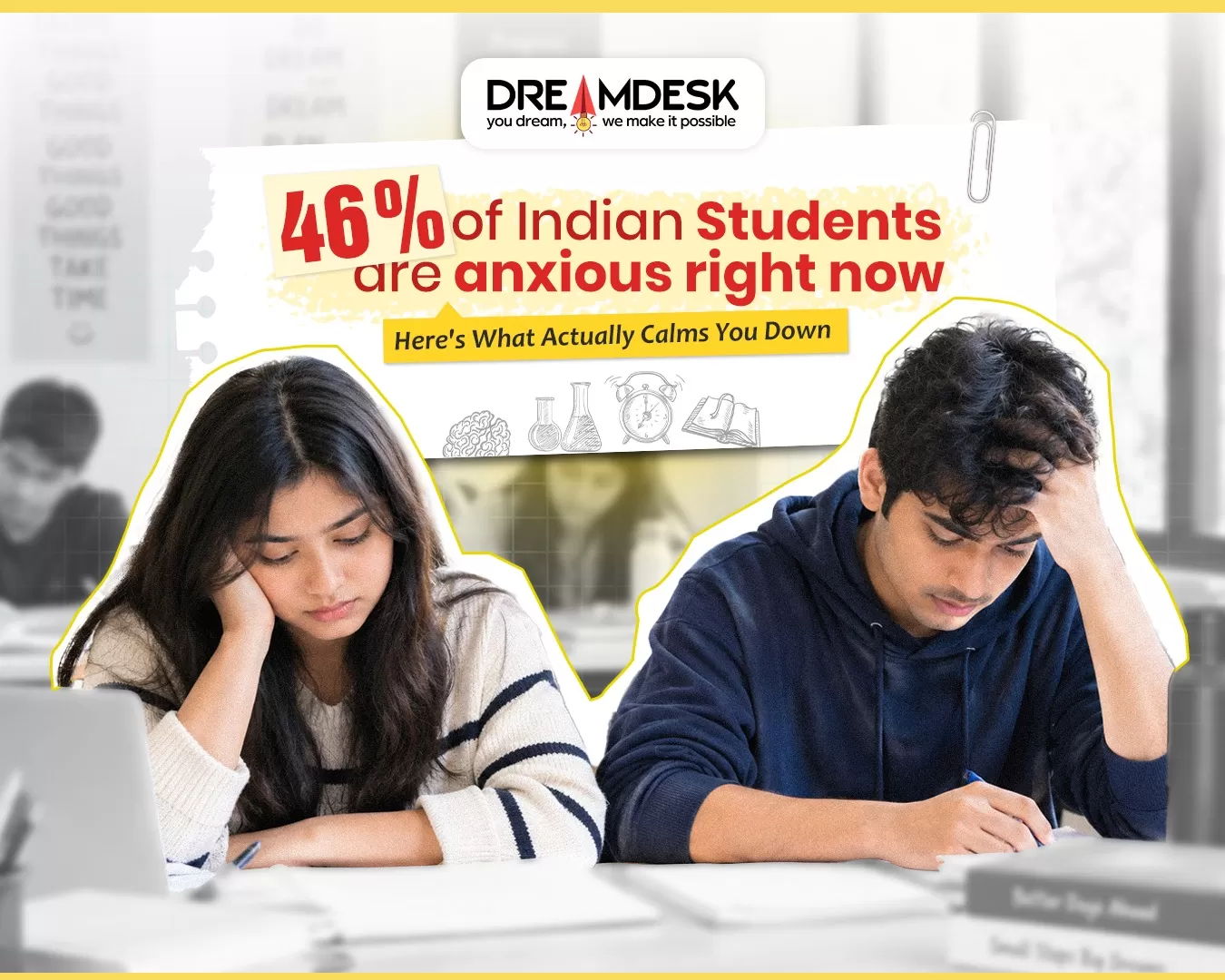
46% of Indian Students Are Anxious Right Now - Here's What Actually Calms You Down
Read that number again. Nearly half of Indian college students report clinically significant anxiety symptoms, and around 32% report moderate to severe depression symptoms. This isn't a handful of "sensitive" students slipping through the cracks. This is what a normal classroom looks like right now. And yet, most students never talk about it. Studies show that nearly 8 in 10 students with severe anxiety don't seek any treatment at all. Not because the problem isn't real, but because nobody told them it's okay to ask for help. This isn't about being "too sensitive" or "not working hard enough." It's about how school, exams, and career pressure genuinely affect the mind, and what you can actually do about it.
Why This Generation Is Under So Much Pressure
A few things are stacking up at once. Board exams, entrance tests, and career decisions now arrive earlier and faster than they used to. Social media adds constant comparison, even when you're not trying to compare. And in many Indian households, one bad result still feels like it defines your whole future, even though it rarely does.
None of this means something is wrong with you. It means the pressure around you is genuinely heavier than it used to be.
Everyday Habits That Actually Help
You don't need a complete lifestyle overhaul. Small, repeated habits do more than one big "self-care day" ever will.
● Move your body daily. Even a 15-minute walk lowers stress hormones and clears mental fog before or after a study session.
● Protect your sleep. Pulling all-nighters before exams often backfires, since tired brains struggle to actually recall what they studied.
● Talk to someone regularly, not just when things fall apart. A five-minute check-in with a friend or parent, done often, matters more than one long conversation during a crisis.
● Name your stress out loud or on paper. Simply writing "I'm anxious about my results" reduces the intensity of the feeling, according to multiple psychology studies on expressive writing.
What to Do the Moment Things Go Wrong
This is the part most advice skips. Reading about "self-care" doesn't help much when you're staring at a bad result, a rejection, or a mistake you can't undo. Here's what actually works in that exact moment:
1. Pause before reacting. Give yourself 60 seconds before typing an angry message, quitting something, or spiraling into worst-case thoughts. Most decisions made in the first minute of panic get regretted later.
2. Breathe on a count. Inhale for 4 seconds, hold for 4, exhale for 4, hold for 4. Repeat this for two minutes. It's a simple pattern used by athletes and even the military to calm the nervous system fast, and it works on a bad exam day too.
3. Name exactly what happened, without the drama. Instead of "my life is over," try "I failed one test." One is a fact. The other is a spiral. Facts are easier to act on.
4. Ask: what's actually in my control right now? Usually it's smaller than it feels; your next action, your next conversation, your next step. Focus only there.
5. Tell one person, today. Not everyone. Just one person you trust. Saying it out loud almost always makes it feel more manageable than carrying it alone.
6. Give yourself a real deadline to reassess, like tomorrow morning. Big decisions made in a bad moment are rarely the right ones. Sleep on it before you act on it.
Asking for Help Is a Skill, Not a Weakness
If stress, sadness, or anxiety starts affecting your sleep, appetite, or ability to function for more than two weeks, that's a signal to talk to a school counsellor, doctor, or mental health professional, not a sign of failure. In India, the treatment gap for mental health remains wide, with most people who need support never receiving it. Being one of the students who does ask early isn't weakness. It's the smarter move.
This is also where good guidance matters beyond grades. Career confusion is one of the quiet, constant sources of student stress, and platforms like DreamDesk exist to take some of that pressure off, by helping students get real clarity on their path instead of guessing and worrying alone.
Your mental health isn't separate from your academic success. It's the foundation underneath it. Protect it the same way you'd protect anything else you can't afford to lose.
This article is for general information only and isn't a substitute for professional advice. If you're struggling, please reach out to a counsellor, doctor, or a mental health helpline in your area.
